Get Directions | (909) 704-7575 | Mon-Fri: 6am - 6pm
-
Give us a Call (909) 316-8257
Essential Preschool Skills: What Your Child Should Learn Before Kindergarten
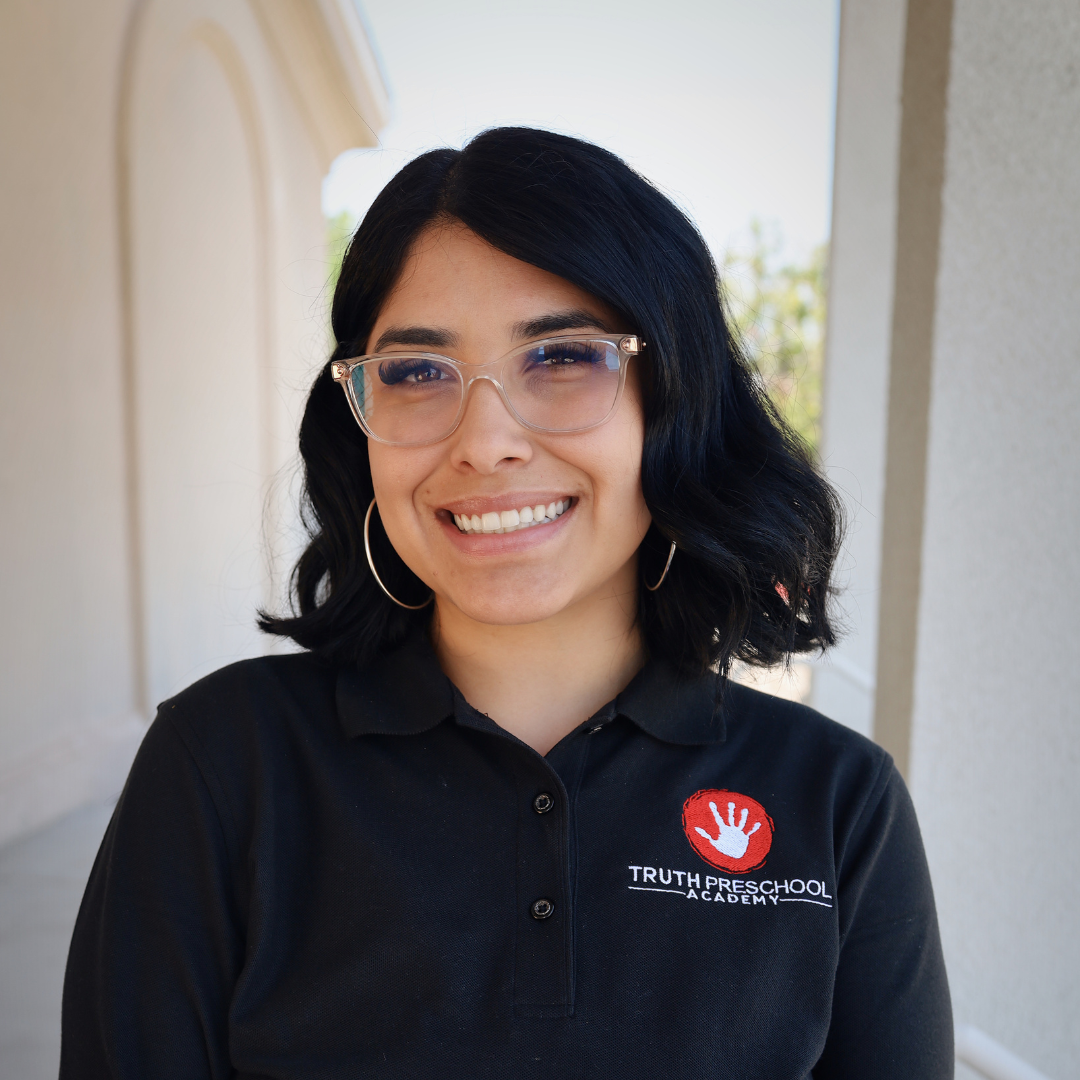
Ms. Danielle
Every parent wonders whether their child is ready for kindergarten. You watch them play, learn, and grow, but how do you know if they’re developing the right skills at the right pace?
Preschool skills cover five key developmental areas. These include cognitive abilities (thinking and problem-solving), language and literacy (communication and pre-reading), fine motor skills (hand-eye coordination and precision), gross motor skills (large muscle movements), and social-emotional skills (managing feelings and relationships). Mastering these foundational abilities prepares children not just for kindergarten but for lifelong learning success.
Understanding which skills matter most helps you support your child’s development intentionally. This guide breaks down exactly what preschoolers should learn and why these capabilities matter for their future.
Why These Skills Matter More Than You Think
According to researchers at the National Institute for Early Education Research, children who enter kindergarten with strong foundational skills are more likely to experience positive long-term academic outcomes. High-quality early education improves school readiness, narrows achievement gaps, and supports stronger academic performance over time, increasing the likelihood of graduation and continued education.
The preschool years (ages 3–5) represent a critical period of rapid brain development. High-quality preschool programs purposefully develop these abilities through play-based learning, which is thoughtfully planned by teachers but seems natural to kids.
When parents and teachers work together to support these developmental milestones, children gain confidence, independence, and a strong foundation for future academic success.
Cognitive Skills: How Preschoolers Learn to Think
Cognitive development involves how children process information, solve problems, and understand the world around them. These thinking skills form the foundation for all academic learning.
Core Cognitive Skills for Preschoolers:
- Sorting objects by color, shape, size, or category.
- Recognizing patterns and predicting what comes next.
- Understanding cause and effect relationships.
- Following multi-step directions (2-3 steps).
- Recalling and retelling stories with key details.
- Comparing quantities (more, less, same).
- Understanding time concepts (before, after, yesterday, tomorrow).
- Beginning problem-solving through trial and error.
Research shows that preschoolers with stronger executive function skills, including working memory, flexible thinking, and self-control, tend to have better academic outcomes as they progress through school, with early EF linked to gains in literacy and math achievement.
Everyday play supports cognitive growth. Building with blocks teaches cause and effect, problem-solving, and spatial reasoning, while sorting toys by color or type builds classification skills used later in math and science. These activities may seem simple, but they strengthen how children think and learn.
Quality preschool programs intentionally support cognitive development throughout the day. Circle time builds memory and pattern recognition through songs and routines, learning centers encourage problem-solving through play, and daily transitions help children practice following steps independently.
Basic Math Skills for Preschoolers: Building Number Sense
Mathematical thinking begins long before formal arithmetic. Preschool math focuses on developing number sense, an intuitive understanding of quantities, relationships, and mathematical concepts.
Essential Math Concepts for Ages 3-5:
- Rote counting to 20 (saying numbers in order).
- One-to-one correspondence (matching one number to one object).
- Recognizing and writing numerals 1-10.
- Understanding more, less, and equal.
- Basic shapes (circle, square, triangle, rectangle, oval, diamond).
- Simple measurement concepts (big/small, long/short, heavy/light).
- Basic spatial awareness (in, out, under, over, beside).
- Beginning addition and subtraction with concrete objects.
According to research summarized by the National Library of Medicine, preschool mathematical competencies, especially early numeracy skills like counting, patterning, and number understanding, are among the strongest predictors of later academic achievement, with early math skills linked to higher mathematics performance through fifth grade and beyond.
Preschool math happens naturally through play. When children set the table for a snack and count cups for each friend, they’re practicing one-to-one correspondence. When they build with blocks and discuss which tower is taller, they’re developing measurement concepts. When they divide crackers between friends, they’re exploring division and fair sharing.
The key is making math concrete and meaningful. Abstract numbers mean little to young children, but counting real cookies, sorting actual buttons, and measuring with real cups makes mathematical thinking tangible and relevant.
Language and Literacy: Communication Foundation
Language development encompasses both spoken communication and pre-reading skills. Strong language abilities predict reading success, academic achievement, and social competence.
Critical Language and Literacy Skills:
- Speaking in complete sentences (5-6 words by age 5).
- Understanding and following complex directions.
- Asking and answering questions about stories.
- Recognizing and naming uppercase and lowercase letters.
- Understanding that letters represent sounds.
- Identifying beginning sounds in words (phonological awareness).
- Recognizing their name in print.
- Holding books correctly and understanding print concepts.
- Retelling familiar stories in sequence.
- Rhyming and playing with language sounds.
- Building a vocabulary of 2,000+ words by age 5.
Quality preschool programs immerse children in language-rich environments. Teachers engage in extended conversations, introduce new vocabulary in context, read aloud daily, and create opportunities for children to tell stories. Children learn that reading conveys meaning and writing communicates ideas.
Fine Motor Skills: Precision and Hand Strength
Fine motor skills involve the small muscles in hands and fingers, enabling precision tasks essential for writing, self-care, and daily activities.
Key Fine Motor Abilities for Preschoolers:
- Using scissors to cut along lines.
- Holding pencils and crayons with a proper grip (tripod grasp by age 5).
- Drawing basic shapes (circle, cross, square, triangle).
- Copying letters and writing their name.
- Stringing beads and lacing cards.
- Using zippers, buttons, and snaps.
- Building with small blocks and manipulatives.
- Using utensils appropriately.
- Turning pages in a book one at a time.
- Completing puzzles with 12-20 pieces.
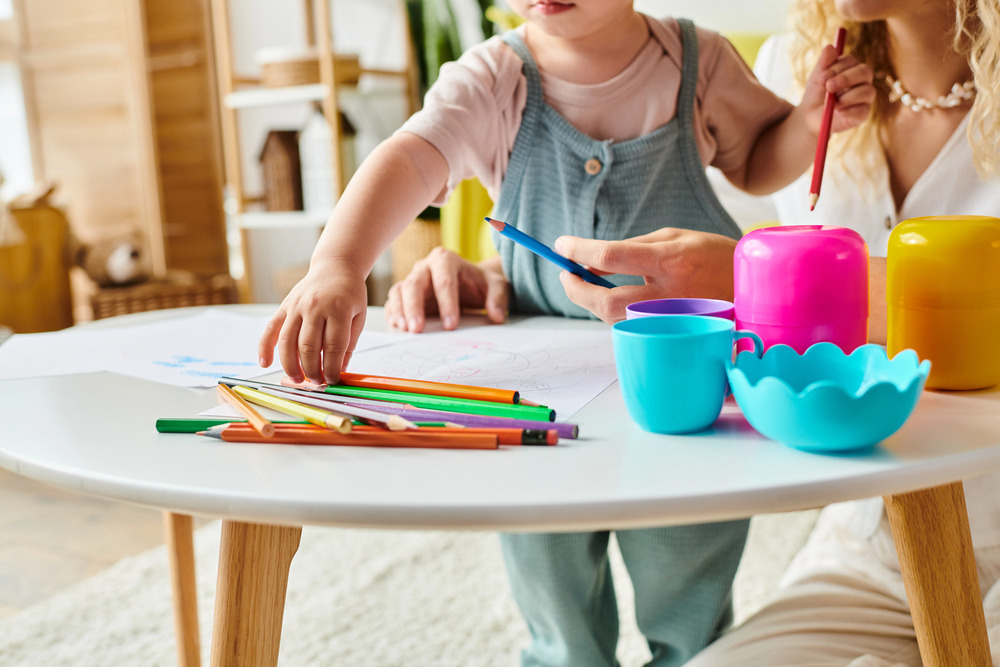
Fine motor development requires practice. Young hands gain strength through activities like playdough, painting, cutting, and writing, while hand-eye coordination develops through threading beads, puzzles, and building with blocks.
Throughout the day, preschool programs incorporate fine motor activities. Art centers provide cutting, drawing, and painting opportunities; manipulative areas offer puzzles and building toys; and writing centers encourage emergent writing and letter formation. These experiences strengthen the hand muscles and coordination needed for kindergarten writing.
Parents may worry if their child resists writing, but forcing it too early can create negative associations. Quality preschools build fine motor skills progressively, ensuring children develop the strength and coordination for writing success.
5 Gross Motor Skills for Preschoolers: Building Strong Bodies
Gross motor skills involve large muscle movements and physical coordination. These abilities support overall health, confidence, and even academic learning; research shows physical activity enhances cognitive function.
Essential Gross Motor Skills by Age 5:
- Running smoothly with coordinated arm and leg movements.
- Jumping forward 10+ consecutive times.
- Hopping on one foot (4-8 hops).
- Climbing stairs, alternating feet without support.
- Throwing and catching a large ball.
- Riding a tricycle or bicycle with training wheels.
- Balancing on one foot for 5+ seconds.
- Kicking a ball with accuracy and force.
- Skipping (alternating hop-step pattern).
- Walking backward and sideways with control.
Gross motor development follows a predictable sequence. Children master basic movements (running, jumping) before complex coordinated actions (skipping, galloping). They develop core strength and balance before refining bilateral coordination (using both sides of the body together).
Quality preschools prioritize outdoor play and structured physical activities. Children need space to run, climb, jump, and explore movement. Playground equipment develops climbing skills and spatial awareness.
Open areas allow running games that build cardiovascular endurance. Structured activities like dancing, obstacle courses, and ball games teach specific motor patterns.
Social-Emotional Skills: The Heart of School Readiness
Social-emotional competence determines how children navigate relationships, manage emotions, and function in group settings. These skills predict academic success more reliably than cognitive abilities alone.
Critical Social-Emotional Abilities:
- Separating from parents without prolonged distress.
- Taking turns and sharing with peers.
- Expressing emotions appropriately with words.
- Following classroom rules and routines.
- Showing empathy when others are hurt or upset.
- Resolving simple conflicts with adult support.
- Working cooperatively in small groups.
- Managing frustration without aggressive behavior.
- Transitioning between activities with minimal difficulty.
- Asking adults for help when needed.
- Demonstrating self-control and waiting abilities.
Preschool provides the critical environment where children learn to navigate social relationships beyond family. They experience sharing, waiting, disappointment, negotiation, and friendship, all essential for kindergarten success.
Quality preschool teachers intentionally teach social-emotional skills. They model emotion vocabulary, coach children through conflicts, create opportunities for cooperative play, and establish consistent routines that provide security. Children learn that everyone has feelings, conflicts can be resolved with words, and adults help when problems feel too big.
Truth Preschool Academy and other faith-based preschools combine social-emotional learning with character development. Children learn kindness, empathy, respect, and self-control within a framework of Christian values. This approach builds not just behavioral compliance but genuine character rooted in caring for others.
Adaptive Skills for Preschoolers: Independence Matters
Adaptive skills, also called self-help or daily living skills, enable children to care for themselves and function independently in school environments. Kindergarten teachers consistently report that self-care abilities matter as much as academic skills for school success.
Key Adaptive Skills by Kindergarten:
- Using the bathroom independently (including wiping and hand washing).
- Dressing and undressing without help.
- Managing coats, backpacks, and belongings.
- Opening lunch containers and food packages.
- Cleaning up after activities.
- Following multi-step routines (arrival, snack time, dismissal).
- Asking for help when needed.
- Blowing their nose and covering coughs/sneezes.
- Recognizing personal belongings.
Self-help skills directly impact classroom functioning. Kindergarten teachers manage 20+ children with limited assistance. When children can use the bathroom independently, manage their belongings, and follow routines without constant support, teachers can focus on instruction rather than basic care.
Many parents unintentionally delay the development of adaptive skills by providing excessive assistance. Tying shoes is faster than teaching your preschooler, but the five minutes invested in teaching independence pays lifelong dividends. Children gain confidence, pride, and self-efficacy when they master self-care tasks.
Quality preschools systematically teach adaptive skills through consistent routines and expectations. Children practice hanging coats, washing hands, serving snacks, and cleaning up daily. Teachers use scaffolding, providing support that gradually decreases as competence increases, to build independence without frustration.
Academic Skills for Preschoolers: What Kindergarten Expects
Academic readiness encompasses the specific knowledge and skills kindergarten curricula assume children possess. While approaches vary, most kindergarten programs expect certain baseline competencies.
Academic Readiness Checklist:
- Recognizing and naming uppercase and lowercase letters.
- Knowing letter sounds (at least beginning consonants).
- Counting to 20 and recognizing numerals 1-10.
- Writing first name (uppercase and lowercase).
- Identifying basic colors (red, blue, yellow, green, orange, purple, black, white).
- Naming basic shapes (circle, square, triangle, rectangle).
- Understanding positional concepts (in, on, under, beside, between).
- Following 2-3 step directions.
- Sitting and attending during group instruction (15-20 minutes).
- Answering questions about stories.
However, academic skills mean little without the underlying developmental foundations. A child who recognizes letters but can’t regulate emotions will struggle. A child who counts to 100 but can’t share or take turns will face behavioral challenges that interfere with learning.
Quality preschool programs balance academic skill development with holistic child development. Children learn letters through playful songs, games, and environmental print exploration, not flashcards and worksheets.
They develop math concepts through cooking, building, and problem-solving, not rote memorization. Academic learning happens within developmentally appropriate, engaging contexts.
How Preschool Skills Connect to Later Success
Early skill sets put children on trajectories that build over time. Children who enter kindergarten ready to learn develop more efficiently, foster positive attitudes toward school, and gain confidence as learners.
These outcomes are directly linked to skills developed during the preschool years.Early literacy skills predict later reading achievement, and early math concepts predict future math performance. Social-emotional skills support mental health, relationships, and long-term career success.
This does not mean preschoolers need rigorous academics or pressure to perform. Research consistently shows that play-based learning leads to better long-term outcomes than academically focused programs. Children learn best through hands-on exploration, social interaction, and joyful discovery, not worksheets and drills.
Supporting Skill Development at Home
Parents play an irreplaceable role in developing preschool skills. While quality preschool programs provide structured learning, home experiences reinforce and extend these competencies.
Simple Ways to Support Development:
- Read aloud daily, discussing pictures and asking questions.
- Engage in conversations that extend vocabulary.
- Provide opportunities for counting (stairs, crackers, toys).
- Encourage self-help tasks even when they’re slower or messier.
- Allow outdoor play for gross motor development.
- Offer art supplies for fine motor practice.
- Play board games to teach turn-taking and rule-following.
- Cook together, measuring and following recipes.
- Practice letter recognition through environmental print.
- Model emotion language and problem-solving strategies.
The key is making learning natural and playful. Preschoolers learn through everyday experiences, conversations during car rides, counting plates while setting the table, identifying letters on signs, and negotiating sharing with siblings.
Parents sometimes worry about “keeping up” with other children or preparing enough for kindergarten. However, anxiety and pressure damage motivation and create negative associations with learning. Children thrive when learning feels joyful, when adults show genuine interest in their discoveries, and when mistakes are treated as learning opportunities.
Red Flags: When to Seek Support
Most children develop skills at slightly different rates; this is normal and expected. However, certain patterns warrant professional evaluation to ensure children receive support for developmental delays early, when intervention is most effective.
Consider evaluation if your 4-5 year old:
- Doesn’t speak in complete sentences or has very limited vocabulary.
- Struggles with simple puzzles or manipulatives most peers handle easily.
- Shows extreme difficulty separating from parents after several weeks.
- Displays frequent, intense aggression toward peers or adults.
- Cannot follow simple 1-2 step directions consistently.
- Doesn’t engage in pretend play or symbolic thinking.
- Shows no interest in letters, numbers, or books.
- Has significant difficulty with basic motor skills (running, climbing, using scissors).
- Seems consistently confused or overwhelmed in group settings.
If you have concerns, trust your instincts and speak with your pediatrician or your child’s preschool teacher. Developmental screenings can identify areas needing support, and early childhood specialists can provide targeted interventions that help children catch up before kindergarten.
Your Child’s Journey Toward Kindergarten Readiness
Preschool skills develop through countless small interactions—conversations, puzzles, taking turns, and discovering letters. These everyday moments build competence, confidence, and school readiness. The preschool years are brief but critical, and children who spend them in environments that support cognitive, physical, social-emotional, and spiritual growth enter kindergarten ready to thrive.
At Truth Preschool Academy in Ontario, CA, our programs are designed around research-based principles of how young children learn best. Our experienced educators hold early childhood credentials and create intentional learning experiences that develop all essential preschool skills. We balance structured learning with creative exploration, fostering academic growth alongside character development.
Our faith-based approach integrates Christian values naturally throughout the day while maintaining educational rigor to prepare children for kindergarten success. We focus on the whole child, including the mind, body, and spirit, building strong foundations for lifelong learning.
Schedule a tour to see how we partner with families to nurture skills, curiosity, and a love of learning that lasts far beyond preschool.
Frequently Asked Questions
What are 5 examples of gross motor skills?
The five essential gross motor skills for preschoolers are running with coordinated movements, jumping forward consecutively, hopping on one foot, climbing stairs alternating feet, and throwing/catching balls. These large muscle movements build strength, coordination, and confidence necessary for active play and physical education.
What are the gross motor skills for preschoolers?
Preschool gross motor skills include running, jumping, hopping, climbing, balancing, throwing, catching, kicking, skipping, and walking in various directions. These abilities develop progressively from ages 3 to 5, with children mastering basic movements before advancing to complex coordinated actions requiring bilateral coordination.
What are gross motor skills activities for preschoolers?
Effective gross motor activities include obstacle courses, dancing, playground play, ball games, riding tricycles, Simon Says, parachute games, and structured movement activities. Quality preschools provide at least 60 minutes of outdoor play daily plus structured physical activities that intentionally develop specific motor patterns.
What are the gross motor skills of a 4-year-old?
Four-year-olds typically run smoothly, jump over objects, hop 4-6 times on one foot, climb playground equipment confidently, throw balls overhand with some accuracy, and balance on one foot for 5 seconds. They’re developing more complex movements like galloping and beginning to skip, though coordination varies individually.
What basic math skills should preschoolers know?
Preschoolers should count to 20, demonstrate one-to-one correspondence, recognize numerals 1-10, understand more/less/equal concepts, identify basic shapes, and explore simple addition/subtraction with objects. Number sense develops through play-based experiences like counting toys, sorting objects, and measuring during cooking activities.
How can I help my preschooler develop fine motor skills at home?
Provide activities like playdough manipulation, cutting with child-safe scissors, drawing and coloring, stringing beads, completing puzzles, and practicing buttoning/zipping. These strengthen hand muscles and coordination needed for kindergarten writing, with quality preschools incorporating fine motor practice throughout daily activities.
What adaptive skills do preschoolers need before kindergarten?
Essential adaptive skills include independent toileting, dressing themselves, managing belongings, opening lunch containers, cleaning up after activities, following routines, and asking for help when needed. Children with strong self-help skills demonstrate 35% less anxiety and adjust to kindergarten routines 50% faster.
When should I worry about my preschooler’s development?
Seek evaluation if your 4-5-year-old struggles with speech, following directions, separation, behavior, or basic skills. Early intervention before age five greatly improves outcomes.
- Phone: (909) 704-7575
- Address: 602 N Virginia Ave, Ontario, CA 91764
-
Hours: Mon-Fri: 6am - 6pm
Sat-Sun: Closed - info@truthpreschoolacademy.com
Truth Preschool Academy All Rights Reserved. Privacy Policy