Get Directions | (909) 704-7575 | Mon-Fri: 6am - 6pm

-
Give us a Call (909) 316-8257


Ms. Danielle
The alarm goes off. Your preschooler refuses to get dressed. Breakfast becomes a battle. You’re searching for lost shoes while already running late. Sound familiar?
A consistent morning routine for preschool transforms chaotic mornings into calm, predictable starts that set children up for learning success. Research shows that structured morning routines reduce stress for both parents and children, improve cooperation, build independence, and create positive associations with school.
Establishing an effective preschool morning routine isn’t about perfection—it’s about creating predictable patterns that help young children transition smoothly from home to school while building essential self-regulation skills.
Why Morning Routines Matter More Than You Think
A study published in the Journal of Family Psychology found that chaotic, unpredictable morning routines correlate with 37% higher cortisol levels (stress hormone) in young children throughout the school day. These elevated stress levels interfere with learning, social interactions, and emotional regulation.
Conversely, children who follow consistent morning routines demonstrate better executive function skills, improved behavior in classroom settings, and stronger emotional regulation. The predictability of routines provides security that allows preschoolers to focus energy on learning rather than anxiety about what comes next.
According to research from the Yale Child Study Center, preschoolers thrive on routine because their developing brains crave predictability. Consistent patterns reduce the cognitive load of decision-making, allowing children to operate more independently and confidently.
Morning routines also build critical life skills. When children follow the same sequence daily—wake up, use the bathroom, get dressed, eat breakfast—they develop procedural memory that enables independence. By kindergarten, children with established routines handle morning self-care with minimal parental support.
What Makes a Good Morning Routine for Preschoolers?
Effective preschool morning routines share specific characteristics that support young children’s developmental needs.
Essential Components:
- Consistent timing: Wake up at the same time daily, even weekends when possible
- Predictable sequence: Same order of activities every morning
- Realistic timeframe: Allow 90-120 minutes from wake-up to departure for preschoolers
- Age-appropriate independence: Children handle tasks they’re capable of completing
- Built-in transition time: Buffer between activities prevents rushing
- Positive tone: Morning sets emotional tone for the day
The best routines balance structure with flexibility. While the sequence stays consistent, you can adjust timing on days when children need extra support or move more slowly.
What Doesn’t Work:
- Waking children at different times daily
- Rushing through activities without transition time
- Expecting perfect compliance without practice
- Changing the routine frequently
- Starting the routine when already running late
- Using mornings for teaching new skills
Preschoolers need repetition and consistency. A routine that changes based on daily whims creates confusion rather than security.
Daily Morning Routine for Preschool: Step-by-Step
An effective morning routine follows a logical sequence aligned with preschoolers’ developmental needs and attention spans.
Wake-Up (6:00-6:30 AM)
Start with a calm, gentle wake-up that sets a positive tone. Avoid rushing directly into demands.
Open curtains to let in natural light, which helps regulate circadian rhythms. Use a consistent wake-up phrase: “Good morning! It’s time to start our day.” Allow 5-10 minutes for children to fully wake before expecting action.
Some children benefit from a brief cuddle or quiet song before transitioning to activities. Others wake ready to move. Learn your child’s pattern and support it.
Tip: Consider a toddler clock that changes color at wake-up time, helping children learn when it’s appropriate to get up.
Bathroom Routine (6:30-6:40 AM)
Immediately after waking, children use the bathroom and wash hands. This prevents accidents and establishes hygiene habits.
Place a step stool at the sink so children reach independently. Pre-portion toothpaste on the toothbrush if needed. Supervise but allow children to handle tasks themselves.
Make this routine non-negotiable and automatic. When children wake and immediately go to the bathroom every single morning, it becomes habit requiring no decision-making.
Getting Dressed (6:40-7:00 AM)
Allow 20 minutes for dressing—significantly longer than the actual task requires. Preschoolers need time for the physical challenge of buttons, zippers, and inside-out clothes, plus inevitable distractions.
Set out clothes the night before. Limit choices to prevent decision overwhelm: “Do you want the red shirt or the blue shirt?” not “What do you want to wear?”
Independence Builders:
- Start with clothes that have no fasteners (elastic waistbands, pullover shirts)
- Practice fasteners during calm times, not rushed mornings
- Expect backward shirts and mismatched socks—it’s part of learning
- Offer help only after children attempt independently: “Try first, then I’ll help if you need it”
Stay nearby to coach and encourage but resist doing everything. The extra 10 minutes allowing independence pays dividends in confidence and capability.
Breakfast Time (7:00-7:30 AM)
Allocate 30 minutes for breakfast, including setup, eating, and cleanup. Preschoolers eat slowly and benefit from unhurried meals.
Offer the same breakfast options daily or rotate through a predictable weekly menu. Decision fatigue in the morning creates resistance. When children know Tuesday means oatmeal, they accept rather than negotiate.
Nutrition Tips:
- Include protein for sustained energy (eggs, yogurt, nut butter)
- Limit sugar that causes energy crashes mid-morning
- Offer water or milk, avoiding juice that spikes blood sugar
- Serve reasonable portions; you can always offer seconds
Make breakfast a calm connection time. Sit with your child even if you’re not eating. Brief conversation about the day ahead prepares children mentally: “Today at preschool, you’ll have outdoor play and art time.”
Final Preparations (7:30-7:45 AM)
The last 15 minutes include teeth brushing, hair combing, gathering belongings, and putting on shoes and coats.
Create a launch pad near the door with hooks at child height, a shoe basket, and a designated spot for backpacks. Everything needed for departure stays in one location.
Checklist for Departure:
- Backpack with lunch/snacks (prepared the night before)
- Comfort item if allowed at school
- Jacket or weather-appropriate outerwear
- Shoes on correct feet (mark with stickers if needed)
- Face and hands clean
Give a 5-minute warning: “In five minutes, we’re leaving for school.” Then a 2-minute warning. Then: “It’s time to go!” Consistent warnings help children transition without surprise.
Departure and Drop-Off (7:45-8:00 AM)
Leave with buffer time. Arriving slightly early eliminates stress and allows children to settle before formal activities begin.
Establish a consistent goodbye routine at school. This might include: walk to classroom together, hang coat and backpack, one big hug, say “I love you, have a great day,” and leave confidently.
Never sneak out when children aren’t looking—this creates anxiety that you might disappear anytime. Brief, confident goodbyes reassure children you’ll return and that preschool is safe.
Morning Routine for Preschool at Home (For Homeschool or Remote Learning)
Families homeschooling or doing remote learning still benefit from structured morning routines even without leaving home.
At-Home Routine Adjustments:
- Maintain consistent wake-up time despite not commuting
- Include getting dressed rather than staying in pajamas
- Create a designated “school space” separate from play areas
- Incorporate physical movement to transition from sleep to learning mode
- Begin formal learning activities at a consistent time daily
The structure signals to children’s brains that it’s time for focused learning rather than free play. Children who transition from pajamas to “school clothes” (even if casual) demonstrate better attention and cooperation during learning time.
Kindergarten Morning Routine at Home
As children approach kindergarten, morning routines should build greater independence in preparation for elementary school expectations.
Kindergarten-Readiness Skills:
- Dressing independently with minimal help
- Managing bathroom tasks completely alone
- Opening lunch containers and food packages
- Keeping track of personal belongings
- Following multi-step morning routines with only verbal reminders
- Managing time awareness (understanding “5 more minutes”)
Gradually increase independence throughout the pre-kindergarten year. By spring, children should handle most morning tasks with supervision but minimal hands-on help.
Transition Tips: Start kindergarten practice routines 2-3 weeks before school begins. This allows children to master the new sequence before the emotional challenge of starting a new school.
Visit the kindergarten building if possible, walking the route from car to classroom. Familiarity reduces first-day anxiety.
Practice the full morning routine, including earlier wake times if kindergarten starts before preschool did. Tired children struggle with behavior and learning.
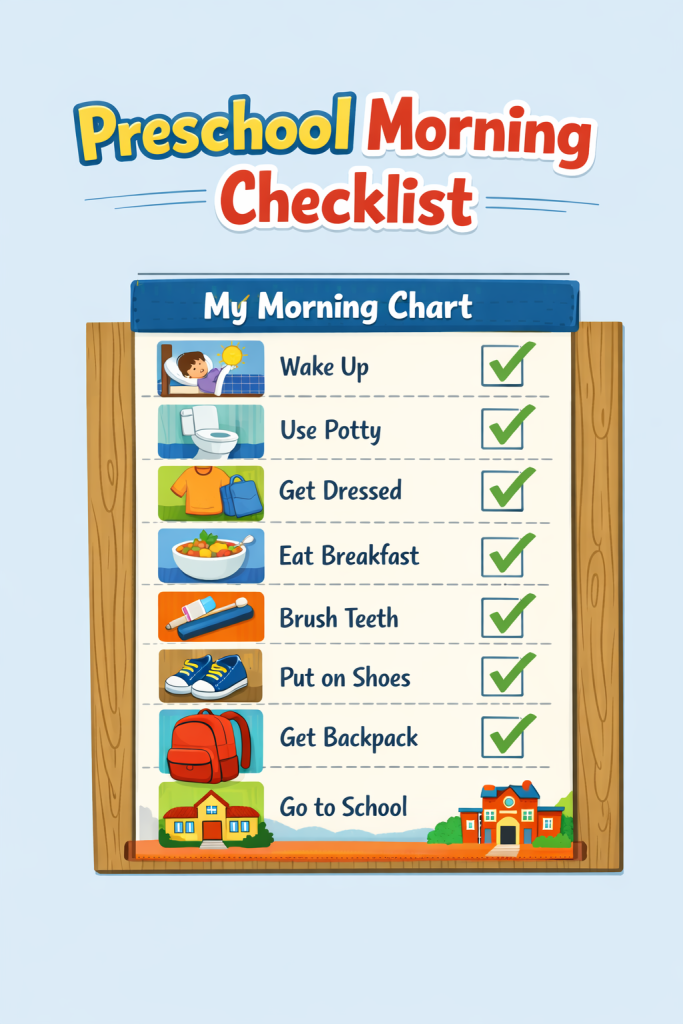
Preschool Morning Checklist
Visual schedules dramatically improve routine compliance in preschoolers who can’t yet read clocks or conceptualize time abstractly.
Creating an Effective Morning Checklist:
- Use photographs or clear illustrations for each routine step
- Arrange in the exact sequence children will complete tasks
- Mount at child’s eye level where they access it independently
- Include only necessary steps (6-8 maximum for preschoolers)
- Allow children to mark off completed tasks (checkmarks, stickers, or flipping cards)
Preschool Morning Meeting Songs
Music naturally engages preschoolers and creates positive associations with morning routines. Many programs incorporate songs during morning meetings or circle time.
Benefits of Morning Songs:
- Signal transitions between activities
- Build community and belonging
- Teach concepts (days of week, weather, calendar)
- Provide predictable structure
- Engage children who learn best through music
- Create joyful start to the school day
Popular Morning Meeting Songs:
- “Good Morning to You” (tune of Happy Birthday)
- “Days of the Week Song”
- “Hello, Friends” greeting songs
- Weather songs
- “If You’re Happy and You Know It”
- Calendar counting songs
At home, consider playing a specific song that signals the morning routine beginning. After hearing it daily, children associate the song with getting ready, creating automatic behavioral responses.
Some families create silly songs about specific routine steps: “This is the way we brush our teeth, brush our teeth, brush our teeth…” to the tune of “Here We Go Round the Mulberry Bush.”
Common Morning Routine Challenges and Solutions
Even well-designed routines encounter resistance. These strategies address the most common obstacles.
“I Don’t Want to Get Up!”
Solution: Ensure adequate sleep. Preschoolers need 10-13 hours nightly. If wake-up time is 6:30 AM, bedtime should be 6:30-7:30 PM. Use gradual wake-up methods like slowly increasing light rather than sudden, jarring alarms.
“I Want to Wear My Pajamas to School!”
Solution: Offer limited choices between two school-appropriate outfits. If children resist both, use “when/then” language: “When you’re dressed, then we’ll have breakfast.” Stay calm and matter-of-fact.
Morning Meltdowns and Tantrums
Solution: Ensure routines allow enough time—rushing triggers emotional dysregulation in preschoolers. Build in 15-minute buffer time for inevitable delays. Address meltdowns with empathy: “I see you’re upset. Let’s take some deep breaths together.”
Forgetting Steps or Needing Constant Reminders
Solution: Use visual schedules and consistent language. Instead of different phrasing daily, use identical cues: “Check your chart—what’s next?” Give children ownership rather than creating dependency on parental reminders.
Sibling Conflicts During Morning Routine
Solution: Create individual routines for each child rather than forcing simultaneous activities. Stagger wake-up times if needed. Assign separate spaces for dressing and preparing.
Parent Running Late Disrupts Routine
Solution: Prepare everything possible the night before—your clothes, coffee pot setup, work materials. Wake 15 minutes before children to handle your preparations before supporting theirs.
The Night-Before Routine That Makes Mornings Easier
Successful mornings actually begin the night before. Evening preparation dramatically reduces morning chaos.
Evening Preparation Checklist:
- Lay out tomorrow’s clothes for children (and yourself)
- Pack backpacks with necessary items
- Prepare or plan breakfast
- Check weather and adjust clothing/outerwear accordingly
- Ensure adequate sleep time by maintaining consistent bedtime
- Review tomorrow’s schedule with children
- Place needed items by the door (shoes, coats, backpacks)
Spending 15 minutes before bed eliminates 30 minutes of morning stress. When children wake to clothes already chosen and lunch already packed, the morning flows naturally.
Involve children in evening preparation appropriate to their age. Four and five-year-olds can choose between two outfits and pack their backpacks with supervision.
How Long Does It Take to Establish a Morning Routine?
Research on habit formation suggests that consistent routines become automatic after approximately 66 days of repetition, though individual variation is significant.
For preschool morning routines, expect:
- Week 1: Significant resistance and constant reminders
- Week 2-3: Gradual reduction in conflicts as patterns emerge
- Week 4-6: Children begin anticipating next steps with fewer reminders
- Week 8-12: Routine feels mostly automatic with occasional regression
Consistency is critical. Every time you skip the routine or change the sequence, you reset progress. Even difficult mornings should follow the established pattern.
Expect temporary regression during life changes (vacations, illness, new siblings). Simply return to the routine consistently, and children re-establish patterns quickly.
Your Path to Better Mornings
Morning routine success requires commitment, consistency, and realistic expectations. You won’t achieve perfect mornings immediately—but you will see gradual improvement that makes the effort worthwhile.
Start with one small change rather than overhauling everything simultaneously. Perhaps begin with a visual schedule this week. Next week, add clothes laid out the night before. Build gradually toward your ideal routine.
Remember that the goal isn’t robotic compliance but helping your child develop independence, self-regulation, and positive associations with school. Some resistance is normal—it’s your calm, consistent response that teaches most powerfully.
Every preschooler deserves mornings that feel secure rather than chaotic, where they build independence rather than dependence, and where they transition to school feeling loved and ready to learn.
Quality preschool programs partner with families to maintain consistency between home and school routines. When morning patterns align, children experience the security and predictability their developing brains need most.
At Truth Preschool Academy, we’ve designed our programs to support the whole child—including the transition from home to school each morning. Our teachers greet children warmly, our predictable routines provide security, and our faith-based approach nurtures the spirit alongside the mind and body.
Schedule a tour to see how we create morning environments where children feel safe, known, and ready to learn—building strong foundations for both school success and lifelong character.
Frequently Asked Questions
What time should preschoolers wake up for school?
Most preschoolers should wake 90-120 minutes before school departure, typically between 6:00-6:30 AM for 8:00 AM start times. This allows adequate time for bathroom, dressing, breakfast, and final preparations without rushing, which is essential for emotional regulation and cooperation.
How do I create a morning routine for preschool printables?
Create a simple visual chart with 6-8 clear illustrations showing routine steps in order (wake up, bathroom, dress, breakfast, teeth, shoes, backpack, leave), laminate for durability, and mount at the child’s eye level. Include a way for children to mark completion, such as checkboxes or movable clips.
What should be included in a preschool morning checklist?
Essential checklist items include wake up, use bathroom, get dressed, eat breakfast, brush teeth, wash face/hands, comb hair, put on shoes, gather belongings (backpack, lunch, jacket), and depart for school. Keep it to 8 steps maximum to avoid overwhelming preschoolers.
How long does it take to establish a morning routine?
Expect 8-12 weeks for morning routines to feel automatic, with gradual improvement throughout. The first 2-3 weeks involve significant resistance and reminders, weeks 4-6 show emerging patterns, and by weeks 8-12 most children follow routines with minimal prompting if parents maintain consistency.
What songs work for preschool morning meetings?
Effective morning meeting songs include “Good Morning to You” (Happy Birthday tune), “Days of the Week Song,” “Hello Friends” greeting songs, weather songs, “If You’re Happy and You Know It,” and calendar counting songs. These signal transitions build community and create positive associations with school.
How do I handle morning tantrums during the routine?
Allow adequate time (90-120 minutes) to eliminate rushing, use empathy (“I see you’re upset”), offer limited choices rather than demands, stay calm and consistent, validate feelings while maintaining expectations, and ensuring adequate sleep. Morning meltdowns often signal inadequate sleep or overwhelming time pressure.
What’s the best morning routine for kindergarten at home?
Homeschool kindergarten routines should maintain consistent wake times, include getting dressed rather than staying in pajamas, create designated learning spaces separate from play areas, incorporate physical movement to transition to learning mode, and begin formal activities at the same time daily for structure.
Should I wake my preschooler at the same time on weekends?
Maintaining consistent wake times within 30-60 minutes on weekends helps regulate circadian rhythms and makes weekday mornings easier. However, if your child needs extra sleep on weekends, gradual adjustment is acceptable—just expect Monday morning to require more support.